



Small and mid-sized businesses (SMBs) tend to get hit harder when events like recessions, pandemics, or quitting sprees occur. Today’s small businesses are wrestling with how to reliably operate profitably in an uncertain economic environment with a competitive hiring landscape. They’re also still navigating the hybrid work or remote work approach as they walk the line between what’s best for business and what employees prefer. But no matter what work environment you have, implementing a strong collaborative culture can help build a solid foundation for your future growth—even in the face of unexpected events—and you can do it with a few best practices and the right technology.
With the right collaboration strategy and tools, your company will run as a well-oiled machine and develop resilience. Here are three best practices and tips to help you create a culture centered around good communication.
Tip 1: Choose the right technology
There are hundreds of tools available on the market that purport to help SMBs communicate and collaborate better, so choosing the right one can feel overwhelming. Many businesses end up choosing multiple separate solutions—one for meetings, one for file storage, one for chat, etc. But it’s wisest to go with an all-in-one technology that scales as you grow.
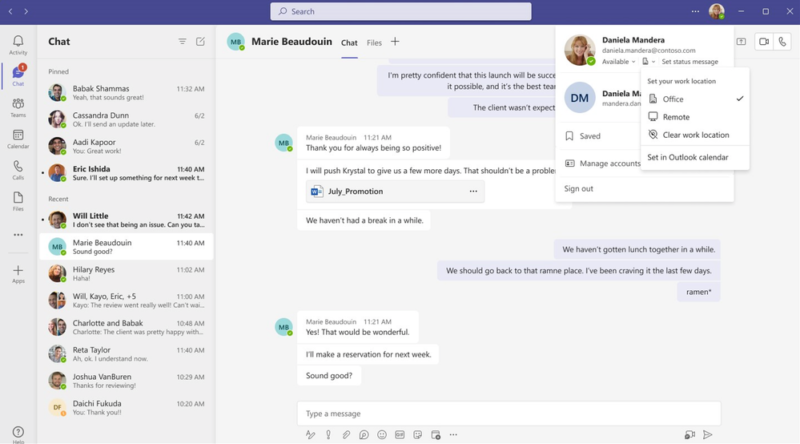
At Point Alliance, we have seen SMBs achieve the greatest collaboration success with Microsoft Teams. Teams is a robust platform that offers multiple ways to collaborate—from videoconferencing to workspace chat to file sharing and more. It’s built for hybrid and remote work so employees from anywhere can collaborate just as they would in an office setting.
Tip 2: Know the difference between communication and collaboration
The two terms are easily confused—after all, they are birds of a feather. UC Today makes the distinction this way:
“Communication…simply refers to how we connect with each other – either through email, video chat, instant messenger, social media, or even voice calls… collaboration is defined as the process of working together with another person to achieve an end goal. When you collaborate with someone, you align your work and behaviour to theirs to accomplish something.”
While collaboration involves communicating, it’s about more than just getting together on a Zoom. This distinction is important as it relates to choosing your technology. Many SMBs mistake solutions like Google Chat, GoToMeeting, or other messaging solutions for collaboration software. True collaboration technology brings in other components that allow employees to actively work together, inject in their creativity, and complete tasks.
Tip 3: Choose the right technology partner
It’s wise to have a technology partner working with you on a collaboration solution. Your partner can serve as a guide to help you evaluate your business collaboration needs so you can select the right solution. Once you’ve chosen your collaboration tool, they can implement it for you. Many SMBs believe they need full-time IT people with certain expertise to procure the right technology, but the flexibility of a third party is more cost-effective.
Additionally, with certain tools, you run the risk of misconfiguration or not maximizing your investment in the technology if you don’t have a partner to implement it and ensure you know how to use it to its fullest extent.
Start Your Collaboration Journey with Point Alliance
Collaboration is at the core of any business operation, and as experts in technology for SMBs, we at Point Alliance have seen what works and what doesn’t. Microsoft Teams is the strongest choice for SMBs looking to create a collaborative culture. We’d be happy to share more about it and discover how we can help support your unique goals. Get in touch anytime.