



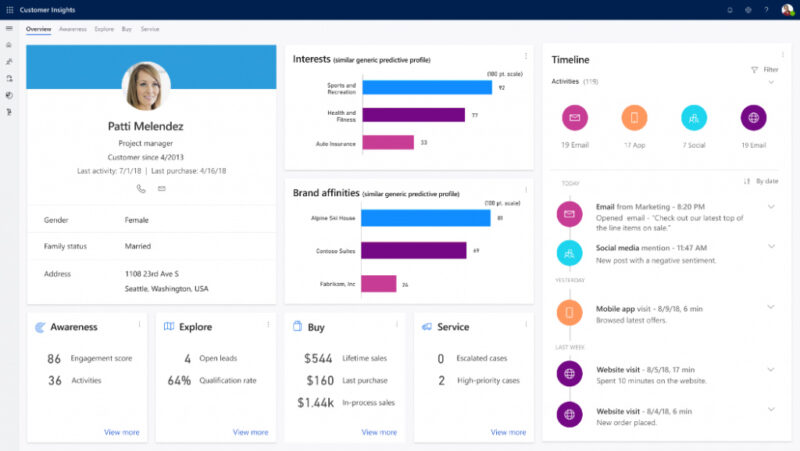
It’s common for small and medium-sized businesses (SMBs) to look at what they pay for customer relationship management (CRM) software and think “it’s not worth it.” CRM tools can be expensive and frustrating, and SMBs rarely have the time to devote staff and dollars to training on all the nuts and bolts of technology.
That’s why bringing on an implementation partner is key. Hiring a technology consultant to help you maximize your investment in CRM solutions can be a game-changer for your sales, marketing, and customer support initiatives. When you have a properly implemented and maintained CRM tool, you can take advantage of use cases you might not even know are possible. Below we dive into a few of the top use cases for CRM.
Delivering a Modern Customer Experience
Today’s customers—no matter the industry—want to interact with brands through a variety of channels. From email to chat bots to text messages, your business needs to be prepared to meet customers where they are to provide modern experiences. Without a CRM solution, achieving this omnichannel communication can be done but is impossible to track. CRM helps you create a unified customer experience across these channels and—most importantly—track the interactions so you can use these records to better understand your customers and evolve with their expectations. It also enables you to provide self-service options customers expect today through multiple channels.
Automating Sales and Marketing Work
Automation technology is no longer just for enterprises with deep pockets. SMBs are taking advantage of automation to hand off repetitive tasks to software, and they’re seeing the time and cost savings benefits as a result. CRM solutions automate many repetitive tasks associated with sales and marketing that enable your staff to get back to strategic work they enjoy instead of being bogged down in sending routine emails or scheduling follow-up calls. Automation boosts the productivity of your teams and further supports the customer experience by automating some interactions that are more effectively completed by technology.
Analyzing Where Sales Succeeds and Fails
CRM solutions give you a full picture of your sales cycle—from initial outreach to post-close. It helps to identify problem spots and bottlenecks so you can take steps to improve sales and support sales people in doing what they do best. CRM can highlight where customers drop off in your sales cycle and also where they have the best experiences so you can make changes accordingly. It also allows you to monitor sales peoples’ performances through a dashboard so you can track metrics, quotas, deal sizes, lead-conversion rates, and more.
Bridging the Sales, Marketing, and Customer Service Gap
Too often, sales and marketing are siloed operations, but successful businesses know that a strong bond between the two is essential for optimizing the sales cycle and maximizing ROI from marketing efforts. CRM solutions become the bridge between these two departments—ultimately resulting in better customer experiences. CRM tools help marketing people understand the types of messages that are appropriate for certain buyers, and they help sales people send those messages to the right people at the right time. With fluid connection between marketing and sales, your marketing-qualified leads easily become sales-qualified leads, and your bottom line grows as a result.
Leverage the CRM Expertise of Point Alliance
At Point Alliance, we’ve seen the power of CRM in an SMB. We dedicate ourselves to helping SMBs take advantage of this unique technology that drives measurable, meaningful results for business growth. We help you choose the right solution with an understanding of your company, and we implement it so your team can reap all the benefits. Get in touch with us today to learn more.